


UAE OFFROAD GUIDE
UAE Dune Driving — Complete Checklist
Tire pressure numbers, technique fundamentals, essential recovery gear, and a pre-trip checklist for Al Badayer, Liwa, Sweihan and everything in between. Written for drivers who want to dune safely, not chase hero shots.
Quick Answer
- Tire pressure: 14-18 PSI for most dune driving; drop to 12 PSI for deep, soft dunes. Never attempt steep faces at stock 30+ PSI.[1]
- Technique: steady momentum beats throttle aggression. Too little = bogging, too much = digging in. Avoid sharp braking.[2]
- Must-carry gear: deflator, 12V compressor, shovel, tow rope, minimum 2 rated shackles, drinking water, charged phone.[3]
- Never drive alone in deep desert. Always go in a convoy of at least 2 vehicles or tell someone your route + ETA.
1. Before you leave the tarmac
A successful dune trip is 80% preparation. The five-minute tarmac-to-sand transition is where most people make the mistakes that end their day.
-
Know your vehicle's 4WD system
Engage 4H (4-wheel high) before leaving the road. Most dune driving is in 4H — 4L is only for steep step-downs and recovery. If you drive a part-time 4WD (Wrangler JL, Patrol Y61), engage the transfer case. If you drive a full-time 4WD with a low-range lock (Land Cruiser, Patrol Y62), lock the centre diff.
-
Air down all four tires
Don't drive onto sand at road pressure. Deflate before entering the desert, not after. Re-inflate before returning to tarmac. More on pressures in Section 2.
-
Carry water — minimum 5L per person
In summer, UAE desert air can exceed 48°C. Heat stress is the single most-common reason dune trips go wrong. Water is non-negotiable, not "nice to have."
-
Tell someone your route & ETA
If you don't return when expected, someone needs to know where to start looking. Share GPS coordinates of entry and planned exit. Phone battery = emergency tool.
2. Tire pressure — the most important setting
The single biggest variable in dune driving is tire pressure. Too much air and the tire bites into the sand like a knife, bogging you down. Dropping pressure expands the contact patch, letting the tire float across the sand instead of digging into it.
| Terrain | Pressure | Why |
|---|---|---|
| Firm sand, beach, packed trails | 18-22 PSI | Mild float, highway-return safe |
| General dune driving, mixed terrain | 14-18 PSI | UAE baseline — good for most drivers[1] |
| Deep, soft, powder dunes | 12 PSI | Maximum float; requires careful cornering[2] |
| Stuck — last resort recovery | 8-10 PSI | Only on beadlock wheels or for short crawls |
Don't forget to re-inflate
Before returning to road driving, re-inflate to your normal road pressure (typically 32-36 PSI depending on vehicle). Driving 80+ km/h on deflated tires overheats them and destroys the sidewalls within a trip. A portable 12V air compressor is the single most important piece of desert gear.
3. Core dune-driving technique
Momentum is your friend
In sand, a bogged-down vehicle can't recover on its own — you can't simply "add more throttle." The trick is to carry enough momentum into a dune face to reach the top before you lose speed. Too much throttle causes the rear wheels to dig holes; too little causes loss of momentum.[2] Aim for steady, firm acceleration, not aggressive stabs at the pedal.
Read the sand ahead
Sand "waves" and the direction of the last wind tell you where the crest is. A dune face that looks uniform may have a hidden steep drop on the far side (called a "slip face"). Never crest a dune you can't see the other side of at full speed — always approach the crest at angle or slowed, and inspect before the commitment.
Ascend straight up, descend straight down
Traversing a dune face at an angle ("side-slopes") is the single most common way to roll a 4x4. When you must cross, minimise time on the slope. Go up the fall line, come down the fall line.
Smooth steering, smooth braking
At low pressure the tire can walk off the wheel if you whip the steering at speed. All inputs should be smooth. Try not to brake too suddenly and keep up braking momentum as smoothly as possible.[1]
Downshifts + engine braking
On long descents, engine-brake with a manual downshift or the paddle. Riding the brake at low PSI generates heat that damages both tire and brake rotor.
4. Essential recovery gear
The minimum kit you should never dune without. All items are in-stock with us in AED, GCC-supported.
Tire Deflator Valve Set
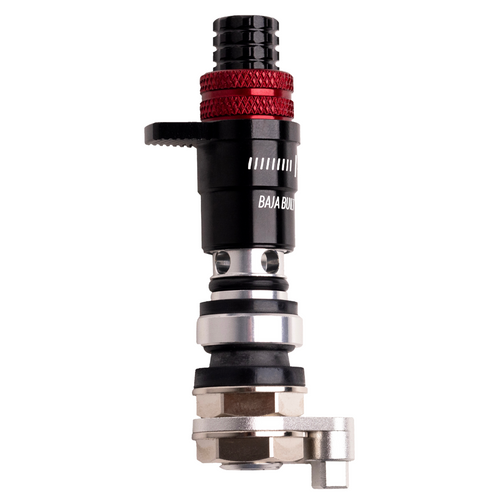
- Set of 5 — one spare, four in use
- Drops all 4 tires to exact target PSI
- Replaces the "guessing with a pressure gauge" method
- Stock: In stock
DHS. 700.00 AED
View →3/4" D-Shackle (with Isolator)
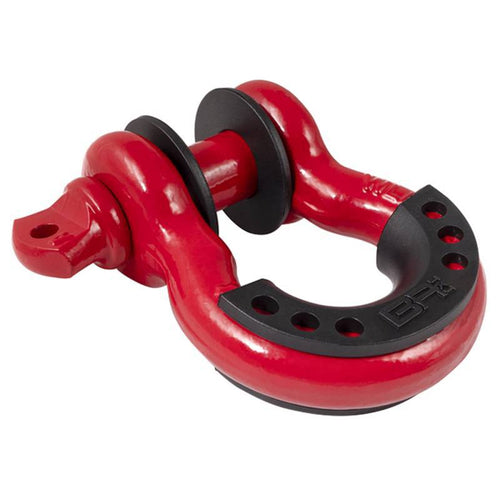
- Rated 3/4" shackle — carry minimum 2 per vehicle
- Red anodised isolator prevents pin seizing
- Essential for tow-strap recovery
- Also available in Black (DHS. 90.00 AED)
- Stock: In stock
DHS. 90.00 AED
View →MAXTRAX Rear Wheel Harness
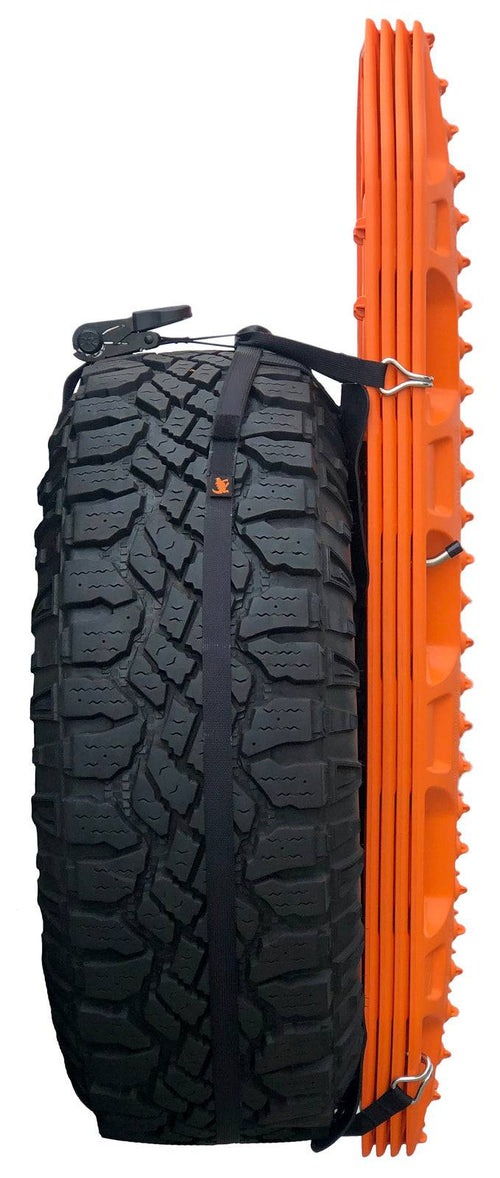
- Mounts MAXTRAX traction boards on the spare
- Frees up boot space for water & camping gear
- Black & silver finish
- Stock: In stock
DHS. 640.00 AED
View →Warn VR EVO 10-S Winch (10,000 lb)
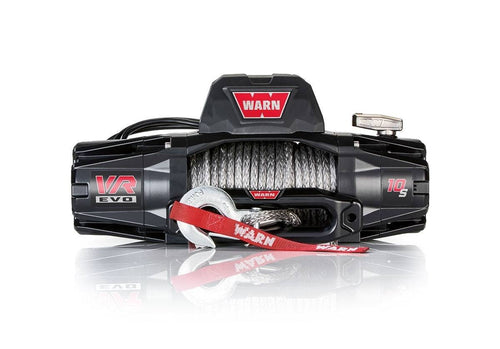
- 10,000 lb line pull — good for most mid-size 4x4s
- Synthetic rope — lighter and safer than steel
- Warn reliability & warranty
- Stock: In stock
DHS. 3,000.00 AED
View →5. Where to dune in the UAE
Three popular UAE destinations, ordered by technical difficulty:
Al Qudra (Dubai) — beginner-friendly
Easy access from Dubai city, moderate dune heights, packed paths widely used — good for getting a feel for the vehicle and deflated tires before committing to deeper desert. Watch for cyclists and pedestrians on the Al Qudra Lakes periphery.
Al Badayer (Sharjah) — mixed
Al Badayer (also known as "Big Red") offers a mix of gentle trails and some of the most challenging and iconic dunes, making it a go-to spot for adventure seekers. Steeper faces than Qudra; still accessible without high commitment. Popular weekend destination.[4]
Liwa (Abu Dhabi) — advanced
Liwa is the UAE's real desert — dunes up to 300m tall, long committing lines, remote. Only attempt with experienced drivers, in a convoy, and ideally with prior dune experience elsewhere. The Liwa festival in winter is the most social time.[4]
Sweihan (Abu Dhabi border) — high-speed
Flat-to-rolling terrain at higher speeds. Less technical than Liwa but rewards shock-tuned vehicles. Do not attempt high-speed desert without dual-rate steering stabilization and properly valved reservoir shocks — see our JL Lift Kit Guide for relevant hardware.
6. What to do if you get stuck
Everyone gets stuck eventually. Managing it calmly is more important than avoiding it entirely.
-
Stop spinning the wheels
Wheel spin in sand digs deeper holes and heats the tire. The first rule when stuck: lift off the throttle immediately.[3]
-
Shovel out around the tires
Use a folding shovel to remove sand from in front of the wheels in the direction you want to drive. Pack sand if the surface is too soft to support the tire.
-
Place traction boards (MAXTRAX)
Wedge boards under/in front of the wheels so the tire climbs onto them. Slow throttle as the board engages. This recovers 90% of sand situations without needing another vehicle.
-
Tow strap recovery
Snatch strap or kinetic rope, rated shackles, and a second vehicle. Always use rated recovery points — never tow from trailer hitches, bumpers or tie-downs (they can fail catastrophically).
-
Winch — last resort for sand
Winches are primarily for rock/mud. In deep sand you rarely have an anchor point. Used with a buried spare tire or a sand anchor, a winch can self-recover, but for most UAE dune scenarios, traction boards + shoveling + another vehicle is faster.
7. Frequently asked questions
What tires are best for UAE dunes?
All-terrain tires with a moderate tread depth float better in soft sand than aggressive mud-terrain tires (which dig rather than float). Popular choices: Toyo Open Country A/T III, BFGoodrich KO2, Cooper Discoverer AT3.
Can I dune in a stock Wrangler / Patrol?
Yes — both are highly capable stock. Airing down is still essential. A lift and bigger tires extend capability but aren't required. The bigger upgrade value is recovery gear, not suspension, for a beginner.
How do I avoid rolling my vehicle on a dune?
Never side-slope. If the dune forces a traverse, commit to straight up/down the fall line, not across. Side-slopes at low PSI can tip even experienced drivers.
Do I need a snorkel?
Not for sand — a snorkel matters for water crossings (wadi). For pure dune driving, a snorkel's main benefit is keeping fine sand out of the filter during dust storms. If you also wadi, it's worth having.
What's the best time of year to dune-bash?
October to April — ambient is comfortable and sand is firmer in cooler mornings. Summer dune driving is possible but you need more water, cooler shocks, and shorter sessions.
Are there guided dune trips in the UAE?
Yes — dozens of operators run dune-safari trips. For your own vehicle experience, look up local 4x4 clubs (Emirates Off-Roaders, Sheikh Zayed 4x4, etc.) — they run group drives with experienced leaders who will coach newcomers safely.
How often should I service after heavy dune use?
Check air filter after every major desert trip (dust saturation kills performance). Change engine oil slightly more often (every 8,000-10,000 km instead of 10-15k). Inspect wheel bearings annually — hot sand accelerates grease breakdown.
Build your dune kit
Shop the recovery, deflator, and shock gear that matches UAE conditions — all in-stock, AED pricing.
Sources & further reading
- Ram Trucks UAE — Driving on Sand: Sand Tire Pressure (official manufacturer guidance on UAE sand PSI).
- CarPrices UAE — Dune Driving 101: Master UAE's Iconic Sand Dunes (technique and momentum fundamentals).
- Gulf News — Desert driving in the UAE: Expert Tips (recovery essentials and stuck-vehicle protocol).
- German Experts UAE — Beginner's Guide To Dune Driving At Liwa Festival (UAE locations, Liwa conditions).
- Dubicars — Mastering Desert Driving: Essential Tips & GCC Insights (GCC-specific context).
Off-road driving carries inherent risk. This guide reflects general best practice but is not a substitute for supervised training or local experience. Always drive within your skill level, respect the terrain, and never drive alone in deep desert.